Third Country Deportations Tracker
The tracker compiles publicly available information to document third country deportations from the United States. This is a fast-moving area of policy, and the tracker may not reflect every country or agreement. If you believe we’re missing information, have suggestions for coverage, or have questions, please contact us.
Last updated: September 2026
Unless otherwise noted, all updates below are using publicly available information as of September 2026.
Jump to: Legal Framework | Asylum Cooperative Agreements | International Law | Countries in Africa | Countries in Asia | Countries in Latin America | Countries in the Caribbean | Countries in Europe | Countries in Oceania Transfer Hubs | Advocacy & Litigation |Responses from Intergovernmental Organizations | DHS Documents | Congressional Oversight and Investigations | Resources
Introduction
Since February 2025, the United States has dramatically expanded deporting people to countries where they have no citizenship, family, or ties, often with little or no notice, and without a meaningful chance to contest it. This tracker, developed by USCRI’s policy and advocacy team, documents those third country deportations and agreements such as Asylum Cooperative Agreements enabling these removals, country by country. It also traces the U.S. law, litigation, and international response shaping the practice.
Third country deportations are deportations of an individual to a country with which they have no meaningful ties (ex. country of nationality or last country of habitual residence). Since February 2025, third country deportations have been systematically pursued as an immigration enforcement tool in the United States. The practice can result in torture, cruel treatment, arbitrary detention, and other serious human rights abuses. Based on USCRI’s analysis of publicly available government data, court records, and reporting from media and civil society organizations, over 22,000 people have been deported to at least 26 countries as of August 2026.
The United States is not alone in pursuing third country deportations, and similar schemes have been proposed or put in place around the world. However, it is distinct in several ways, from the lack of advance notice provided to noncitizens prior to deportation, denial of a meaningful opportunity to challenge the deportation, to the withdrawal of responsibility of the individual post-deportation. The United States has also deported people with humanitarian-based protections in direct contravention to both U.S. and international law.
The Agreements: As of July 2026, the Executive Branch of the U.S. Government has pursued agreements with over 50 countries to accept third country deportees. In exchange for accepting non-nationals, foreign governments have in return received money, visa restriction lifts, and other favorable treatment from high level officials in government. Most of these agreements are not made public.
Congress has not specifically appropriated funds for third country deportation payments to foreign governments. A Senate Foreign Relations Committee minority report found that the Administration provided at least $32.3 million to five foreign governments.
Taken from U.S. Soil: Those subject to third country deportation are individuals who have been arrested by U.S. immigration enforcement from their homes, communities, or jobs. Others have been arrested when they showed up for mandatory U.S. Immigration and Customs Enforcement (ICE) check-ins or court hearings. Some were in immigration detention, another immigration enforcement tool that has increasingly been used to illegally detain people without reasonable suspicion.
In many cases, individuals do not receive notice of their deportation or their final destination country before being boarded onto a flight. If individuals receive notice, it is usually in English, even if they cannot understand. Individuals subject to third country deportation typically have no choice in where they are sent, a practice that raises serious due process and human rights concerns, particularly when the receiving country may not be safe in general or for them in particular. Flights leaving the United States may stop in transit on U.S. occupied soil or another country before arriving in the country that agreed to accept third country deportees.
Landing in an Unfamiliar Country: In almost every case, individuals have no ties to the third country. It may even be their first time on the continent.
Upon landing, the individuals are subject to the laws and policies of the third country. Once individuals leave U.S. airspace, the United States supposedly withdraws all responsibility. In a third country, individuals are at increased risk of chain refoulement, or removing a noncitizen to a third country who then removes the noncitizen to a country where they face risk of harm, torture, or persecution. The third country may have already started facilitating their returns to their country of origin. In some cases, the third country may not have strong diplomatic ties with a deported individual’s country of origin, further complicating the individual’s return.
In the meantime, individuals have been forcibly detained in airports, prisons, hotels, and military camps in the countries in which they have been deported. Although many of the countries have laws for refugees and asylum seekers, those rights do not seem to be afforded to individuals who may be forcibly returned to a country where they fear persecution or torture without notice and without a meaningful opportunity to challenge the return.
Legal Framework
While the Immigration and Nationality Act (INA) and other U.S. law does not absolutely prohibit third country deportations, there are safeguards that the U.S. federal government must follow. Deporting any noncitizen to a place where their life or freedom would be threatened violates domestic and international law. Deporting certain humanitarian immigrants, including refugees and asylees, disregards the protections Congress intended when it passed the Refugee Act of 1980.
U.S. Law
The below chart outlines U.S. law around third country deportations for certain categories of noncitizens.
Chart 1. U.S. Law on Third Country Deportations
| Noncitizen Category | Third Country Deportations |
|---|---|
| Applies to all of the categories below |
Before any removal, constitutional guarantees and safeguards must be afforded to noncitizens. The United States may not remove noncitizens to any country where their life or freedom would be threatened because of their race, religion, nationality, membership in a particular social group, or political opinion. The United States may not remove noncitizens to a country where they would be tortured.
Sources: 8 U.S.C. § 1231(b)(3); 28 C.F.R. § 200.1 |
| Asylum Applicant |
May be sent to a “safe third country,” pursuant to a diplomatic agreement with assurances that the individual’s life or freedom would not be threatened on account of race, religion, nationality, membership in a particular social group, or political opinion. Once deported, the individual would have access to claim asylum or equivalent temporary protection in that country. The United States has had a safe third country agreement with Canada since 2002. Recently, new agreements have been signed with countries around the world. Jump to section “Asylum Cooperative Agreements.”
Source: 8 U.S.C. § 1158(a)(2)(A) |
| Asylee (Asylum Granted) |
Third country deportations are not allowed before a formal termination of asylum status is final. A grant of asylum is for an indefinite period of time. An asylee is authorized to stay and work in the United States. An asylee is eligible to apply for a green card after one year of residence in the United States. Sources: 8 C.F.R. 1208.14(e); 8 U.S.C. § 1158(c)(1) |
| Asylee Grant Terminated |
In order for an asylee to be deported, the U.S. Department of Homeland Security (DHS) must pursue a formal termination of asylum status. There must be a reason for termination, such as a fundamental change in country conditions or the asylee is a danger to national security. DHS must provide adequate notice of a request to reopen a case in immigration court. An immigration judge must exercise their discretion in granting the motion to reopen. During the proceedings, the asylee is granted the right to be represented. If an immigration judge finds sufficient grounds for termination, the individual may be removed to a third country pursuant to a diplomatic agreement with assurances that the individual’s life or freedom would not be threatened on account of race, religion, nationality, membership in a particular social group, or political opinion. The individual must be eligible to receive asylum or equivalent temporary protection in the third country.
Source: 8 U.S.C. § 1158(c)(2) |
| Withholding of Removal |
A grant of withholding of removal does not afford an individual the level of permanency or family reunification as asylum. A grant of this status means that the individual cannot be returned to their country of nationality or place of last residence where their life or freedom would be threatened. Multiple courts have held that noncitizens cannot be removed to a country that was not designated by an immigration judge as a possible country for removal. In order to propose another country for removal, proper notice and an opportunity to be heard must be afforded to the noncitizen. In order to ensure compliance with the Convention against Torture (CAT), of which the United States is a signatory, the Secretary of State must receive assurances from the country’s government that a noncitizen would not be tortured. The Secretary must ensure that assurances are sufficient enough that the deportation would be consistent with Article 3 of the CAT. Sources: 8 U.S.C. § 1231(b)(3); 8 C.F.R. §§ 1208.16(f), 1208.17(a); 28 C.F.R. § 200.1; Andriasian v. INS, 180 F.3d 1033, 1041 (9th Cir. 1999); Kossov v. INS, 132 F.3d 405, 408-09 (7th Cir. 1998); El Himri v. Ashcroft, 378 F.3d 932, 938 (9th Cir. 2004); Aden v. Nielsen, 409 F. Supp. 3d 998, 1004 (W.D. Wash. 2019) |
| Convention against Torture (CAT) Relief |
A grant of relief under CAT does not afford an individual the level of permanency or family reunification as asylum. An individual could be granted withholding of removal or deferral of removal under CAT. DHS must seek a formal termination of this status before removing a noncitizen through filing a motion, providing notice, and a hearing. The noncitizen must have an opportunity to submit additional evidence. The immigration judge must make a de novo determination as to whether the noncitizen’s case warrants CAT relief. In order to remove an individual to a third country, the Secretary of State must receive assurances from the country’s government that a noncitizen would not be tortured. The Secretary must ensure that assurances are sufficient enough that the deportation would be consistent with Article 3 of the CAT.
Sources: 8 U.S.C. § 1231(b)(3); |
| Any other noncitizen ordered removed |
For any other noncitizen ordered removed, immigration officials must first allow the noncitizen to designate a country for removal. The Attorney General cannot ignore the noncitizen’s designation, unless they fail to designate a country promptly, the designated country refuses to accept the noncitizen, or removal to the designated country would be prejudicial to the United States. After exhausting the possibility of removal to the designated country, a noncitizen may be removed to an alternative country, including:
After exhausting those options, a noncitizen may be removed to another country that will accept the noncitizen. Sources: 8 U.S.C. §§ 1231(b)(2)(E), (b)(3)
|
Asylum Cooperative Agreements
Individuals who are physically present or who have arrived in the United States can seek asylum in the United States. In the United States, asylum may be granted to a noncitizen who meets the definition of a “refugee”—an individual who is outside of their country of nationality or last habitual residence who is unwilling to return to that country due to a well-founded fear of persecution based on race, religion, nationality, membership in a particular social group, or political opinion. Under international law, the right to seek asylum is universal. See Article 14, Universal Declaration of Human Rights.
Under U.S. law, the Immigration and Nationality Act (INA) lists several exceptions to the right to apply for asylum (e.g., one year time limit, prior denial), including the “safe third country” exception. The “safe third country” exception requires a diplomatic agreement with another country in order to apply to an individual seeking asylum in the United States. Such agreements may be called “asylum cooperative agreements” or “safe third country agreements.”
“Asylum cooperative agreements” (ACAs) are agreements whereby a country agrees that it will accept third country nationals seeking asylum in the United States to be deported to its territory. The INA states that in order for the safe third country exception to apply, the country cannot be one in which the individual would face a risk to life or freedom on account of race, religion, nationality, membership in a particular social group, or political opinion. The individual must have access to a full and fair asylum procedure (or equivalent protection) in that country. See 8 U.S.C. § 1158(a)(2)(A). Unaccompanied children cannot be subject to this exception. See 8 U.S.C. § 1158(a)(2)(E).
The safe third country exception can apply to asylum seekers during expedited removal procedures and in both affirmative and defensive proceedings. See 84 Fed. Reg. 63,994, 8 CFR 208.30(e)(7); 8 CFR 1208.4(a)(6); 8 CFR 1240.11(h). In 2019, DHS and DOJ published an interim final rule to modify agency rules to give effect to the ACAs signed with El Salvador, Guatemala, and Honduras. The ACA with Guatemala went into force before the agreements were largely curtailed by the Covid-19 pandemic. In 2021, the U.S. Government formally suspended the ACAs.
Current Use of ACAs
Based on current laws and regulations, anyone who has entered the United States on or after November 19, 2019, who is seeking asylum in the United States can be subject to an ACA deportation. Unaccompanied minors are excepted.
As of the latest page update, the U.S. Government is using ACAs to deport individuals who have pending asylum applications in immigration court, the Executive Office for Immigration Review (EOIR). Asylum Cooperative Agreements represent the clearest type of agreement behind third-country deportations, but even when an ACA with a country exists, third-country deportations mostly occur outside the parameters of the ACA.
How does it happen? DHS attorneys will launch a motion (sometimes without written notice) to “pretermit” the asylum application based on an existing ACA. Pretermission is the denial of an application for asylum without a full evidentiary hearing. This can happen at any stage of proceedings. Respondents must then respond to the motion. Some judges may grant time to respond. Other judges have not, forcing respondents to oppose the motion without preparation. Respondents must articulate any defenses or articulate a reason why they cannot be deported to the country. Defenses can include arguments that the ACA does not apply to the respondent, that the respondent is excepted from the ACA, and that the respondent faces an individualized fear of persecution, harm, or torture in the proposed “safe third country.”
If the DHS motion succeeds, the immigration judge will deny the asylum application based on an ACA without hearing or deciding on the full merits of the asylum claim. In addition, a successful motion to pretermit also precludes the immigration judge from proceeding with an applicant’s claim for withholding of removal or CAT protection. Individuals also retain the right to appeal the decision. If an individual does not have any other form of protection from removal, they will be deported to the designated ACA country.
These documents have set the foundation for the increasing use of pretermissions and ACA deportations.
Matter of C-I-G-M- & L-V-S-G-, 29 I&N Dec. 291 (BIA 2025): This case involves a woman from Guatemala who filed for asylum due to a fear of persecution. DHS launched a motion to pretermit her asylum application due to an ACA with Honduras. The respondent opposed the motion based on fear of deportation to Honduras and retroactive application of the ACA relative to her entry into the United States and asylum application. On fear of deportation to Honduras, the BIA stated that general country conditions of threats against Guatemalans in Honduras would not suffice. On retroactive application, the BIA stated that the ACA could apply to her even though she entered the United States in August 2023 and the ACA entered into force in June 2025.
Matter of C-A-R-R-, 29 I&N Dec. 13 (BIA 2025): The BIA affirmed an immigration judge’s (IJ) decision to deny consideration on the merits of three asylum applications due to incompleteness. The BIA affirmed the IJ’s decision, stating that “a complete Form I-589 requires a specific substantive answer to every question on the form.”
In a fourth application, the respondent answered all of the form questions. The IJ then asked for a declaration in support of the asylum application in English. The IJ rejected the declaration because it was filed after the requested date and did not include a Spanish (the respondent’s preferred language) declaration or a certificate of translation. The IJ also found that the declaration lacked sufficient details, so the IJ excluded the asylum application and deemed it “waived and abandoned.” The BIA stated that the IJ could not exclude the asylum application based on the failure to file a declaration alone. The BIA remanded the record to the IJ to consider the merits of the asylum application.
EOIR Policy Memo 25-28 (April 11, 2025) allows adjudicators to pretermit legally insufficient asylum applications without a hearing on the merits. While complete guidance on what would make an application “legally insufficient” is not provided, the policy memo refers to examples of filing over the one-year filing deadline, claims that lack sufficient nexus, and disqualification grounds.
Matter of E-A-R-M-: DHS’s oral motion to pretermit respondents’ applications for asylum was sufficient to provide the requisite notice of intent to remove respondents to a third country under an asylum cooperative agreement (ACA).
Matter of N-E-R-S-: The immigration judge should not have required DHS to provide an implementing instrument showing the operating procedures for an ACA.
- After DHS provides proper notice of intent to remove a respondent to a third country under the ACA, the burden shifts to the respondent to show by a preponderance of evidence that the ACA does not apply.
- Many of the ACAs contain a clause that states the United States and the third country will further develop operating procedures, that would presumably provide more info on who the third country is willing to take, if the third country prefers a specific population, or if the third country imposes any restrictions. This ruling makes the production of those operating procedures unnecessary, essentially forcing respondents defending against ACA third country removals to argue blindly.
International Law
The two main conventions implicated in third-country deportation agreements are the 1951 Refugee Convention, its 1967 Protocol, and the Convention against Torture and Other Cruel, Inhuman or Degrading Treatment or Punishment.
The principle of non-refoulement, according to the 1951 Refugee Convention, “asserts that a refugee should not be returned to a country where they face serious threats to their life or freedom.” The United States acceded to the 1967 Protocol in 1968, and Congress passed the Refugee Act of 1980 to codify the Convention’s protections into U.S. law.
The UN’s Convention Against Torture (CAT) prevents countries from deporting migrants to their country of origin if the migrants are likely to face torture there. The United States is a party to the Convention, and in 1998, Congress passed the Foreign Affairs Reform and Restructuring Act to incorporate its obligations into U.S. law.
Known Agreements and Transfers
In this section, we document known agreements and transfers, and country conditions for each country are provided for additional context. The Agreement outlines the terms, timeline, and any public disclosures of the arrangement between the United States and destination country. Known Transfers documents instances of individuals sent to that country, including dates, numbers, and nationalities when available. Country Conditions provides context on the human rights, rule-of-law, and protection environment deportees face on arrival. Together, these sections provide important information on the status of the agreement, and what risks it poses to those transferred.
Countries in Africa
Cameroon
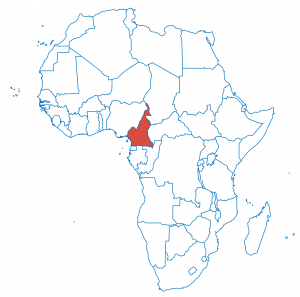
The Agreement:
In December 2025, through an exchange of diplomatic notes Cameroon agreed to accept third-country nationals deported from the United States and to act in accordance with international law. This agreement was made publicly available by a Freedom of Information Act (FOIA) request by Refugees International and Human Rights First in June 2026. The diplomatic notes reveal that the United States intends “to provide support for assisted voluntary return programs.” This is in reference to the International Organization for Migration (IOM)’s Assisted Voluntary Return and Reintegration (AVRR) program) to facilitate the third-country nationals’ repatriation, making this agreement a violation of non-refoulement.
Known Transfers:
A total of 36 third-country nationals are known to have been deported to Cameroon on at least four separate occasions.
On January 15, 2026, nine women and men from Angola, the Democratic Republic of the Congo, Ghana, Morocco, and Zimbabwe and one stateless individual were deported. Eight of the nine individuals had withholding of removal or protection under the Convention Against Torture (CAT) while in the United States. Two women from Morocco agreed to return to Morocco even though one had fled after being persecuted there.
On February 16, 2026, eight women and men from the Democratic Republic of the Congo, Ethiopia, Kenya, Senegal, Sierra Leone were deported. Seven of them had withholding of removal and one had deferral of removal under CAT.
On April 29, 2026, nine women and men from Ghana, Angola, the Republic of Congo, and Ethiopia were deported. At least four of them were LGBTQ+ individuals with withholding of removal, and others were fleeing political persecution.
On May 27, 2026, 10 women and men from Ethiopia and Zimbabwe were deported, all with withholding of removal or protections under CAT.
The 36 individuals who remain, originally from the Democratic Republic of Congo, Ghana, Angola, Ethiopia, Sierra Leone, Kenya, Senegal, Zimbabwe and Morocco, who had U.S. legal protection from deportation to their countries of origin, filed a lawsuit in early August that “asks the court to suspend any further implementation of the arrangement while its legality is being determined, require the government to clarify the applicants’ legal status, and prevent their onward removal to countries where they face persecution or torture.“ It asks the administrative court in Yaoundé to “suspend any further implementation of the arrangement while its legality is being determined.”
Country Conditions:
Cameroon – United States Department of State
The United States Must Not Deport People to Cameroon
US: Deported Cameroonian Asylum Seekers Suffer Serious Harm | Human Rights Watch
“How Can You Throw Us Back?”: Asylum Seekers Abused in the US and Deported to Harm in Cameroon | HRW
Party to the 1951 Refugee Convention and 1967 Protocol: Yes
Ratified Convention against Torture: Yes
Central African Republic
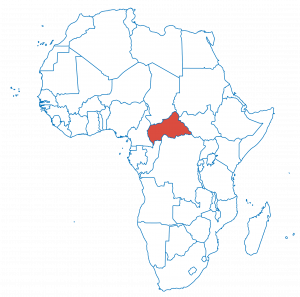
The Agreement:
The Central African Republic agreed to take U.S. deportees after an $85 million infusion for the International Organization for Migration’s (IOM) operations there. The agreement terms remain undisclosed.
Known Transfers:
On June 12, 2026, 18 third-country nationals from Afghanistan, Georgia, Uzbekistan, Syria, Tajikistan, Turkey, Cameroon, and Iran were deported from the United States. Among these individuals are 24-year-old Turkish national Yagiz Doruk Hallac and an Iranian pro-democracy activist, and according to the Iranian American Legal Defense Fund (IALDF), deportation to CAR and potential refoulement to Iran is “a potentially fatal action.”
A deportation flight occurred on July 31, 2026, with at least four Cubans, an Ecuadorian, and a Honduran. Third country deportation watch reports 31 individuals being deported.
Country Conditions:
State Department Travel Advisory – Central African Republic
UNHCR – Central African Refugee Crisis
UNOCHA – Central African Republic 2026 Humanitarian Response Plan
Party to the 1951 Refugee Convention and 1967 Protocol: Yes
Ratified Convention against Torture: Yes
Democratic Republic of The Congo
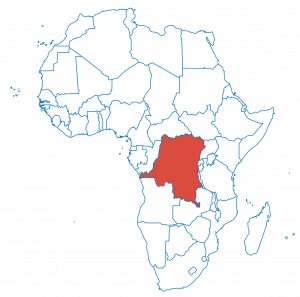
The Agreement:
On December 24, 2025, the United States and the Democratic Republic of the Congo signed an agreement for the transfer of third-country nationals. This agreement was outlined in diplomatic notes first made public through a FOIA request filed by Refugees International and Human Rights First in June 2026. According to these notes, diplomatic assurances were made by the DRC, saying they would respect the Refugee Convention and the Convention Against Torture. However, the migrants deported in April 2026 were done so under an undisclosed agreement providing for the transfer of 50 to 100 people per month.
An April 2026 press release from the DRC government revealed that although it maintained full control over admission to its territory and mechanisms for the removal of individuals, logistical support would be provided by the U.S. Government through specialized agencies such as the IOM and the United Nations High Commissioner for Refugees (UNHCR); the State Department obligated $50 million to the UNHCR in DRC for their third country arrangement. On the day the migrants arrived in the DRC, the government published another press release clarifying the transitory and temporary nature of the migrants’ stay in the DRC and that the United States was responsible for financing their stay.
Known Transfers:
On April 17, 2026, the U.S. government deported 15 people to Kinshasa, the capital city. These people were 15 women and men from Colombia, Ecuador, and Peru. “They took us, they put us on a plane, and they chained us by our hands and feet,” one Colombian man said. None of the migrants speak French, the national language of the DRC. They are being held in a hotel for a 3-month period.
In May 2026, the Administration temporarily paused deportation flights to the DRC due to the Ebola outbreak in the region.
As of June 5, 2026, more than half of the migrants deported in April have returned to their countries of origin through the IOM’s Assisted Voluntary Return (AVRR) program, according to the Congolese government and one of the migrant’s lawyers. Upon their arrival in April, attorneys representing the migrants said that all 15 had legal protections from removal as immigration judges had determined they could face persecution or torture there.
Country Conditions:
Democratic Republic of Congo – Human Rights Watch
DRC: Authorities must end support for armed group suspected of war crimes – Democratic Republic of the Congo | ReliefWeb
Party to the 1951 Refugee Convention and 1967 Protocol: Yes
Ratified Convention against Torture: Yes
Equatorial Guinea
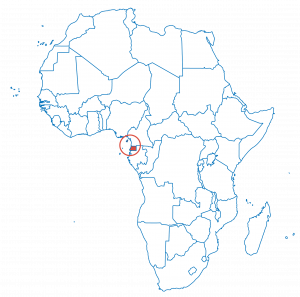
The Agreement:
The Administration transferred $7.5 million to the Government of Equatorial Guinea from the Department of State’s “Migration and Refugee Assistance” account. In November 2025, Senator Jeanne Shaheen (D-NH) raised alarm about this highly unusual transfer and sought information from Secretary of State Marco Rubio on whether this payment is for accepting third country deportations.
In June 2026, a Note Verbale (a formal diplomatic document used by states and international organizations to communicate official positions, protests, and treaty actions) concerning the third-country agreement, made on October 2, 2025, became available following a FOIA request by Refugees International and Human Rights First. The agreement does not specify a cap, but Equatorial Guinea can accept or reject the transfer of an individual. Equatorial Guinea expressed its intention to act in accordance with international law. However, deportees were informed that they could not seek asylum in Equatorial Guinea and authorities indicated they would be repatriated unless an alternative country could be found.
According to the Senate Foreign Relations Committee minority report released in February 2026, “As of January 2026, Equatorial Guinea has received 29 third country nationals, the majority of whom it has quickly sent onward to their country of origin or intends to send onward.” There is a lack of transparency about what Equatorial Guinea is doing with the money in this case.
Known Transfers:
On November 24, 2025, nine individuals with withholding of removal or protection under the Convention Against Torture (CAT) were deported. These individuals were nationals of Georgia, Mauritania, Angola, Ghana, and Eritrea.
As of March 2026, seven out of the nine individuals have been repatriated, and one was relocated to another country where he had legal entry. Diadie Camara was repatriated via Morocco on December 25, 2025, after submitting an asylum application in Equatorial Guinea.
On January 22, 2026, 20 individuals with withholding of removal or CAT protection were deported, including 20 women and men from Ethiopia, Eritrea, Mauritania, Angola, the Democratic Republic of the Congo, and Chad. All 29 individuals were detained in a hotel.
As of March 2026, 10 of the 20 individuals have been repatriated.
On April 29, 2026, two Cameroonians and one Egyptian were deported.
As of early June, six deportees were repatriated, but three were sent back to Equatorial Guinea after their home countries refused to accept them, and lawyers lost contact with the other three.
On June 18, 2026, eight people from Jamaica, the DRC, Eritrea, Ethiopia, Senegal, Uganda, and a potential additional country were deported.
In early July, reporting showed that migrants were being housed with suspected Ebola patients with “unimaginable” hygiene conditions.
On July 29, 2026, eight men and two women including nationals of Ethiopia, Eritrea, Angola, Mauritania, Cameroon, Egypt, and Jamaica, were deported.
Country Conditions:
EG Justice Raises Alarm Over U.S.–Equatorial Guinea Deportation Agreement
Human Rights Questions Emerge Over the Detention of US Deportees in Equatorial Guinea
Voice of America – Cameroon Says Hundreds of Its Citizens Deported from Equatorial Guinea
Party to the 1951 Refugee Convention and 1967 Protocol: Yes
Ratified Convention against Torture: Yes
Eswantini
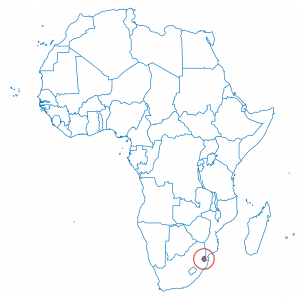
The Agreement:
Human Rights Watch (HRW) reported that Eswatini agreed to accept 160 deportees for $5.1 million for the country’s border and migration management capacity. The agreement is valid for one year and can be renewed. Eswatini has agreed to accept individuals “with criminal backgrounds and/or who are designated suspected terrorists.” Eswatini’s spokesperson stated that all third country nationals would eventually be repatriated.
Known Transfers:
There have been three known transfers so far (19 individuals total): 5 individuals on July 16, 2025, 10 individuals on October 6, 2025, and 4 individuals on March 11, 2026.
On July 16, 2025: 5 individuals from Vietnam, Laos, Yemen, Cuba (Roberto Mosquera del Peral), and Jamaica (Orville Etoria) were deported to Eswatini. All 5 individuals were initially kept at Matsapha Correctional Centre, a high security prison, in solitary confinement. The Eswatini Government said that the men would ultimately be sent back to their home countries but said there were no firm timelines for repatriation and did not clarify if the men would remain in prison.
On July 25, 2025, an Eswatini lawyer was denied access to the five men, even after filing official representation papers with the court. In August, he was finally granted access after launching a constitutional challenge on the denial of access to legal counsel. On September 2, the Legal Aid Society released a statement stating that they have been denied access to their client, Orville Etoria.
On September 21, 2025, one man from Jamaica was repatriated. In order to coordinate his repatriation, Eswatini sought support from the Jamaican Government and the International Organization for Migration (IOM). On October 6, the Eswatini government said that two others are expected to be repatriated soon.
In August-September 2025, civil society groups protested the deportations outside the U.S. Embassy in Eswatini. The main opposition party released a statement criticizing the decision, calling it “human trafficking disguised as a deportation deal.”
On October 6, 2025, 10 individuals from Vietnam, Philippines, Cambodia, Chad, and Cuba were also placed into detention facilities, and the Eswatini Government said that it would work with stakeholders for their ultimate repatriation.
On October 28, 2025, Roberto Mosquera del Peral’s attorney said that he was on hunger strike for being kept in prison for more than three months. The Eswatini Government responded that he was currently “fasting and praying,” although close associates say this statement is false. Mosquera ended his hunger strike after 30 days.
A U.S. attorney representing three men from the October flight and two men from the July flight said that he has no way of getting in touch with his clients: “I cannot call them. I cannot email them. I cannot communicate through local counsel because the Eswatini government blocks all attorney access.”
On March 11, 2026, four third-country nationals from Tanzania, Sudan, and Somalia arrived in Eswatini. In a press statement, the government of Eswatini stated that the agreement was “for the purpose of facilitating their eventual repatriation to their respective countries of origin,” illustrating their intentions of chain refoulement.
On July 8, 2026, 11 individuals arrived in Eswatini to be detained at the Matsapha Correctional Centre, bringing the total number of third-country deportees to Eswatini to 30.
As of July 2026, two of the three Jamaican nationals deported to Eswatini have formally declined repatriation. Jamaican officials had not yet been able to contact the third.
Country Conditions:
Eswatini – United States Department of State
Party to the 1951 Refugee Convention and 1967 Protocol: No
Ratified Convention against Torture: Yes
Ghana
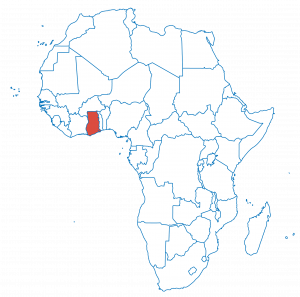
The Agreement:
On September 11, 2025, President John Mahama said that the country had entered a deal with the United States and that 14 individuals had already arrived. Ghana said it would accept West African nationals, citing Ecowas’s free movement protocol that allows member state citizens to reside in other Ecowas countries visa-free for up to 90 days. Ghana said that no money was exchanged. Ghana would accept third country deportees and address the issue of its nationals overstaying their visas in the United States. Mahama implied that through this deal, Ghana had become the only country subject to visa restrictions to secure a complete reversal from the U.S. Administration.
Known Transfers:
September 5, 2025: 14 individuals including nationals from Nigeria and the Gambia were deported.
Individuals were removed from the United States on a military cargo plane chained at the hands, waist, and ankles. At least two individuals were granted withholding of removal, meaning that the U.S. government promised that they would not be deported to their countries of origin. At least three individuals were granted deferral of removal under CAT, meaning that they were granted temporary protection due to the risk of torture if deported to their countries of origin.
According to court filings, individuals were informed that they would be removed from Ghana on September 12, 2025. Mahama stated that the Nigerian individuals were already returned to their country by bus. Facing imminent removal by Ghana, at least one individual was denied internet access, which was his primary way of communicating with his wife and lawyer. By September 15, 2025, all of the individuals had been sent to their home countries.
Since September 2025, at least 42 individuals have been deported.
At least 8 individuals were left in Togo without documents. Some men were of other nationalities, including Nigeria and Liberia. A bisexual Gambian man said he was sent to Gambia where they criminalize same-sex relations. Ghana has allegedly conducted unlawful removals before, detaining and deporting Fulani refugees from Burkina Faso.
In November 2025, a Sierra Leonean who was granted withholding of removal from the United States based on a fear of persecution or torture in Sierra Leone was deported to Ghana. Her wrists and ankles were shackled for the flight. In Ghana, she was kept in hotel for six days. When Ghanian officials tried to board her on a bus to Sierra Leone, she was dragged on the floor and sustained injuries.
One of the deportees was detained at the airport for five days with no access to phones, showers, or change of clothes. At least eleven men were detained at Dema camp, a detention facility at a military training camp in a remote area outside of Accra. At Dema, the men were exposed to heat, mosquitos, and unsanitary water.
In October 2025, Ghanian lawyers filed a lawsuit challenging the agreement with the United States, arguing that it contradicts international treaties that Ghana has signed onto, including the Convention against Torture. Eleven individuals who were deported to Ghana also filed a lawsuit challenging their illegal detention at Dema camp. In June 2026, a lawsuit was filed at the Community Court of Justice of the Economic Community of West African States (ECOWAS), with the Global Strategic Litigation Council as part of the coalition.
A deportation flight occurred on July 31, 2026, carrying over 30 third country nationals from Nigeria, Guinea, Sierra Leone, and Niger that all had been granted protection from removal to their home countries according to Third Country Deportation Watch.
Country Conditions: Ghana – Regions of Upper West and Upper East: Map of activities in the General Protection, Human Rights and Social Cohesion sector (11 Jun 2025) – Ghana | ReliefWeb
Party to the 1951 Refugee Convention and 1967 Protocol: Yes
Ratified Convention against Torture: Yes
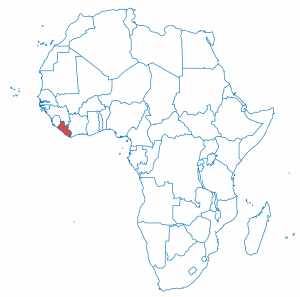 Liberia
The Agreement:
In one of the largest agreements so far, Liberia agreed to take 1,200 third-country nationals from the United States. According to the Liberian information minister, these will include African nationals as well as nationals from North America, South America and the Caribbean, and according to Liberia’s justice minister, they will have the opportunity to seek asylum. The US has agreed to extend visitor visas for Liberians from 12 to 36 months and has pledged $124 million as part of the arrangement.
Known Transfers:
On August 20, 2026, 20 individuals were deported to Liberia. Five of them refused to get off the plane and had to be restrained for several minutes by U.S. federal agents. They were forced off the plane but eventually returned to the plane according to three anonymous individuals.
Country Conditions: Liberia – United States Department of State
Party to the 1951 Refugee Convention and 1967 Protocol: Yes
Ratified Convention against Torture: Yes
Rwanda
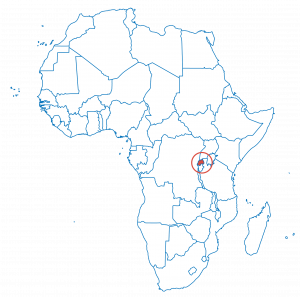
The Agreement:
On June 3, 2025, an agreement was reportedly signed. The agreement states that the United States would provide an upfront payment to Rwanda of $7.5 million. The agreement was kept secret until August 5, when Rwanda announced that it reached an agreement with the United States to accept up to “250 migrants.” A spokesperson said that the United States sent a list of 10 individuals to be vetted by Rwanda. A spokesperson said that deportees would be provided with training, healthcare, and accommodation. Other implementation details are still being developed or not publicly known.
The agreement mentions Rwanda’s “established expertise” in managing returns, perhaps referring to Rwanda’s previous deal with the United Kingdom, which was ruled unlawful by the UK Supreme Court for risk of human rights violations.
Known Transfers:
In mid-August 2025, 7 individuals of unknown nationalities were deported.
On August 28, 2025, the Rwandan government stated that 7 individuals arrived in mid-August. The spokesperson also shared that three individuals would return to their home countries and four expressed a wish to stay in Rwanda. The spokesperson said that those approved for resettlement in Rwanda would receive accommodation, workforce training, and health care. IOM and Rwandan social services have visited the individuals.
Country Conditions: Rwanda – United States Department of State
Party to the 1951 Refugee Convention and 1967 Protocol: Yes
Ratified Convention against Torture: Yes
Sierra Leone
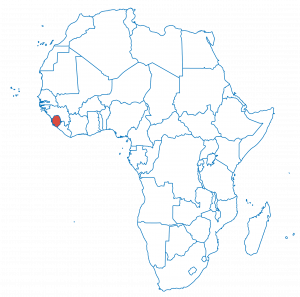
The Agreement:
According to diplomatic notes, Sierra Leone would consider accepting a maximum of 300 citizens of the Economic Community of West African States (ECOWAS) per year. These notes were made available following a FOIA request by Refugees International and Human Rights First in June 2026. Funded by $1.5 million USD from the U.S. government, the government of Sierra Leone approved a contract with Kenvah Solutions to provide services including reception and temporary accommodations to third-country nationals. Sierra Leone was one of the countries on the January 21, 2026, visa ban. According to the Minister of Foreign Affairs and International Cooperation, accepting U.S. third-country nationals was one of the conditions being discussed for the removal of the visa restrictions. As of June 2026, the restrictions are still in place.
Known Transfers:
On May 19, 2026, nine individuals were deported: nationals from Ghana, Guinea, and Senegal. A health ministry official said they would be housed in a hotel and repatriated within two weeks.
On June 18, 2026, about a dozen people, including one Nigerian man, were deported. According to this man’s lawyer, the migrants had legal protections based on credible fears of persecution. A briefing pamphlet that was distributed to the deportees upon arrival describes Sierra Leone as a “temporary transit location,” and states that “no long-term settlement is provided for or permitted.”
On July 31, 2026, around 10 nationals of Ghana, Liberia, Benin, Nigeria, and Togo were deported.
Country Conditions: Sierra Leone – United States Department of State
Party to the 1951 Refugee Convention and 1967 Protocol: Yes
Ratified Convention against Torture: Yes
South Sudan
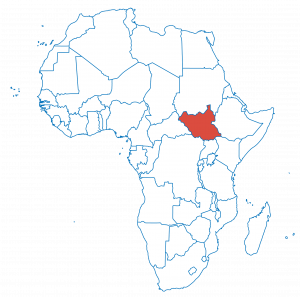
The Agreement:
In September 2025, Ambassador Apuk Ayuel Mayen, Spokesperson for the Ministry of Foreign Affairs and International Cooperation, stated that there is no formal agreement and “no discussions” with the United States on third country deportations. The Ambassador confirmed that there was “bilateral engagement” between the two countries on the May-July deportation of eight men.
South Sudan may be seeking reversal of U.S. policies targeting its nationals. On April 5, 2025, the U.S. Department of State (DOS) announced the revocation of all visas held by South Sudanese passport holders and banned their entry. On May 6, 2025, U.S. Citizenship and Immigration Services (USCIS) announced a 6-month extension of the designation for Temporary Protected Status (TPS) for South Sudan, a rare decision considering that all other TPS designations that have come up for review in 2025 have been terminated. (When the extended designation was due to expire on November 3, USCIS announced its termination, effective January 5, 2026.)
Known Transfers:
May 20, 2025: 8 men from Cuba, Laos, Mexico, Myanmar, Vietnam, and South Sudan were put on a flight destined for South Sudan. Before completing the deportation operation, a federal court judge ordered the plane to reroute to a U.S. military base in Djibouti to afford the men opportunity for recourse. On July 5, 2025, the Administration completed the deportation operation, and the eight men were sent to South Sudan.
On May 20, 2025, the United States deported individuals protected by a federal court class action under D.V.D. v U.S. Dep’t Homeland Security to South Sudan with less than 24 hours’ notice. Attorneys representing the deported individuals filed for emergency relief on May 20. On May 21, a federal court judge ordered the federal government to maintain custody and control of the individuals. The judge also ordered that each individual must be given a chance to challenge their deportations to South Sudan and access to counsel. At a court hearing, the judge learned that class members were being held at a U.S. military base in Djibouti.
The individuals were detained in a converted shipping container by a nearby burn pit, which made it difficult to breathe. The individuals were also kept under 24-hour surveillance. As of June 23, 2025, at least one of the men represented by Human Rights First did not have a reasonable fear interview scheduled, the first step to challenging his deportation.
The U.S. federal government appealed the emergency relief to the Supreme Court. On June 23, 2025, the majority of the court issued a stay, clearing the way for the federal government to continue third country deportations for the individuals deported to South Sudan, as well as any other groups the federal government pursued for removal. On July 5, 2025, the eight men were removed to South Sudan.
On September 6, 2025, the Mexican man, Jesus Munoz-Gutierrez, was sent back to Mexico. The repatriation was brokered between South Sudan’s foreign ministry and the Mexican Embassy in Ethiopia, since Mexico currently has no embassies or consulates in South Sudan. South Sudanese officials said it received assurance from the Mexican government that he would not be subjected to torture, inhuman or degrading treatment, or undue prosecution. Munoz-Gutierrez told journalists that he “felt kidnapped” when he was deported to South Sudan.
On June 19, 2026, the Vietnamese man, Tuan Phan, was repatriated to Vietnam after spending over a year in detention.
Country Conditions: ASG Khiari warns indiscriminate drone strikes and arms flows are driving Sudan’s war | United Nations Peace Operations – Sudan | ReliefWeb
Party to the 1951 Refugee Convention and 1967 Protocol: No
Ratified Convention against Torture: Yes
Uganda
The Agreement:
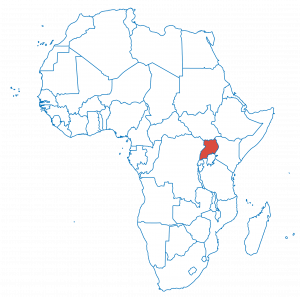
On August 21, 2025, the Ugandan government announced that it signed an Asylum Cooperative Agreement with the United States. On September 3, 2025, a cooperation agreement, dated July 29, 2025 was made public. The Ugandan government prefers to accept nationals of African countries and will not accept individuals with criminal records or unaccompanied children. Uganda agreed not to send anyone to their home country until a final decision on their international protection claims has been reached. The agreement does not state if Uganda is receiving money or other diplomatic assurances. The Ugandan Ministry of Foreign Affairs stated that the agreement is temporary and that details will have to be worked out.
Known transfers:
The Administration sent eight third-country nationals to Uganda as part of an Asylum Cooperative Agreement on April 1, 2026. These asylum seekers included seven men and one woman from Mauritania, Angola, Ethiopia, Mali, Togo and Guinea, according to Uganda’s Ministry of Internal Affairs. However, a senior Ugandan government official said the asylum seekers’ stay in Uganda was part of “a transition phase for potential onward transmission to other countries,” which doesn’t correspond to the purpose of an agreement allowing deportees to seek asylum in Uganda.
Country conditions:
The Guardian – Uganda stops granting refugee status for Eritreans, Somalis and Ethiopians
NTV Kenya – Uganda stops granting refugee status to Ethiopians, Somali
DRC – Asylum policy under threat – The case of Uganda
Party to the 1951 Refugee Convention and 1967 Protocol: Yes
Ratified Convention against Torture: Yes
Countries in Asia
Bhutan
The Agreement:
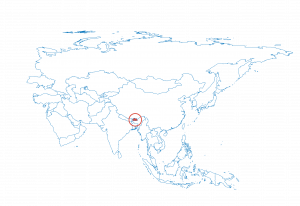
There is no evidence of an agreement between the United States and Bhutan, Nepal, or India.
Known Transfers:
March 25, 2025: 10 Bhutanese refugees deported via Delhi, India, including Binod Shah and Ray.
April 7-14, 2025: 6 Bhutanese refugees including Ramesh Sanyasi were deported to Bhutan via India, then taken to Panitanki, a town on the India-Nepal border.
Since February 2025, four U.S. removal flights have gone to Nepal and nine flights have gone to India. In June, Asian Law Caucus stated that at least 27 Nepali-speaking Bhutanese refugees had been deported.
On January 13, 2026, Mohan Karki was deported to Bhutan via commercial airlines, a practice that makes these deportations difficult to track. Upon arrival, Bhutanese officials gave him the choice between prison or a taxi to the Indian border.
Some individuals are stateless, since Bhutan will not recognize them as citizens and Nepal will not grant them citizenship. Due to Bhutan’s refusal to recognize the deported individuals as nationals, Bhutan is included in our third country deportations tracker.
At least four individuals had been resettled to the United States with refugee protections. One individual reported that he was given a choice between deportation to Nepal or Bhutan. He chose Bhutan, where he was held under strict surveillance, had his documents confiscated, and was forcibly smuggled into Nepal.
Individuals who have spoken to the media say that they were born in refugee camps in Nepal. They were deported to Bhutan, where their family faced persecution. Within 24 hours, they were expelled from Bhutan. Some are hiding in India or Nepal. At least four individuals have gone back to the refugee camps they were born or grew up in. Humanitarian aid groups have left the camps, and individuals have returned to destroyed huts.
On April 24, 2025, Nepal’s Supreme Court temporarily halted the deportations of four men, who were allowed to return to the refugee camps they left as children while internal authorities investigated their cases. In June 2025, the Nepali government issued them deportation orders and imposed fines. The government insisted that if they can’t return to the United States, they should go to Bhutan.
At least one individual has died by suicide. Others are hiding in India or Nepal where they have no ties or immigration status, and still others have gone missing. Some have been arrested and detained by the Nepali government for crossing the border illegally, but the Nepali government has nowhere to deport them.
Country Conditions: Bhutan – United States Department of State
Twice Stateless: The Double Erasure of Bhutanese Refugees
Party to the 1951 Refugee Convention and 1967 Protocol: No
Ratified Convention against Torture: No
Laos
The Agreement:
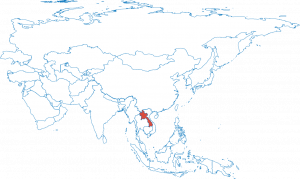
There is no known agreement between the United States and Laos as of June 2026.
Known Transfers:
On August 11, 2025, 15 Hmong (an ethnic group living primarily in Southeast Asia and China) and Laotian immigrants were deported. One of the Hmong refugees was Wa Kong Lor, who was born in a Thai refugee camp and had never set foot in Laos. This is why Laos is included in this tracker along with Bhutan. Lor’s deportation to Laos rendered him stateless, which meant he was unable to open a bank account and receive money from the United States.
Kua Yang, mentioned in the same article, was also born in a Thai refugee camp and had never been to Laos when he was deported there in March 2025.
Ma Yang, mother of five, was also deported on March 6, 2025. She was also born in Thailand and lived in the Milwaukee area since she was 8 months old. She had also never been to Laos, and does not speak the Lao language. “The United States sent me back to die,” she said. “I don’t even know where to go. I don’t even know what to do.” Upon arrival, she was questioned by military authorities and sent to a rooming house, where “guards did not allow her to leave or contact anyone for five days.”
Zero people were deported to Laos in FY2024.
Country Conditions: Laos 2024 Human Rights Report
Party to the 1951 Refugee Convention and 1967 Protocol: No
Ratified Convention against Torture: Yes
Legislative Response:
Southeast Asian Deportation Relief Act of 2026 (H.R. 7608) – GovTrack.us (bill to halt the removal of individuals including Hmong refugees, introduced by Rep. Judy Chu (D-CA)
Uzbekistan
The Agreement:
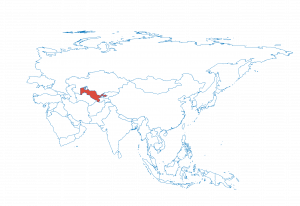
On April 30, 2025, the Department of Homeland Security announced a partnership with the government of Uzbekistan to deport over 100 undocumented migrants from Uzbekistan, Kazakhstan, and Kyrgyzstan. At least the April 30 deportation was fully funded by Uzbekistan.
Known Transfers:
On April 30, 2025, 131 individuals from Uzbekistan, Kazakhstan, and Kyrgyzstan were deported.
Uzbek media reported that Kyrgyz and Kazakh nationals will continue on to their home countries. Uzbek Foreign Ministry said in a Telegram post, “The repatriation process will be organized on the basis of humanitarian and legal principles, ensuring the dignified and safe return of citizens” (translated).
An additional third-country deportation flight may have occurred in September.
On March 10, 2026, six third-country nationals were deported to Uzbekistan.
Country Conditions:
State Department – 2024 Country Reports on Human Rights Practices: Uzbekistan
Uzbekistan: Cooperation with EU and US Raises Questions about Human Rights Obligations
Party to the 1951 Refugee Convention and 1967 Protocol: No
Ratified Convention against Torture: Yes
Countries in Latin America
Belize
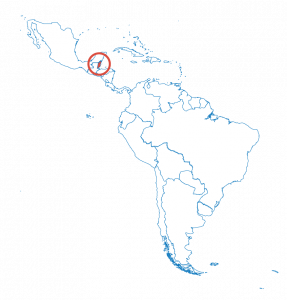
The Agreement:
The United States and the Government of Belize signed a Safe Third Country Agreement on October 20, 2025, formally known as the “Agreement for Cooperation Regarding the Examination of Protection Requests”. The agreement provides for the transfer of asylum seekers from the United States while their refugee claims are being processed. Anthony Sylvestre, the Leader of Government Business, said that the 2-year agreement is limited to the Caribbean Community (CARICOM) and Central American nationals, excluding Guatemalans, and sets a cap of ten refugees per year. Belize is allowed to “terminate or suspend the agreement at any time.” Professional skills and criminal records of intended deportees are examined.
Known Transfers:
On July 10, 2026, a 41-year-old Haitian national was deported to Belize. According to the CEO of the Ministry of Foreign Affairs, Belize was supposed to receive three people, but only one arrived. He said that third-country nationals would be processed through the UNHCR refugee program and apply for asylum.
On July 30, 2026, seven third-country nationals including four Haitians, one Nicaraguan, one Salvadoran and one Honduran were deported.
Country Conditions:
Party to the 1951 Refugee Convention and 1967 Protocol: Yes
Ratified Convention against Torture: Yes
Costa Rica
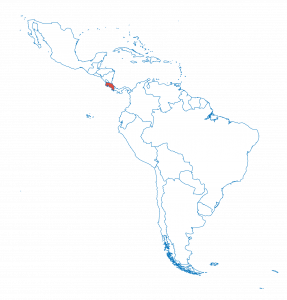
The Agreement:
The deportations in February 2025 took place without a written agreement. On February 17, 2025, the Costa Rican Government released a statement about the agreement: “The Government of Costa Rica agreed to collaborate with the United States in the repatriation of 200 illegal immigrants to their country . . . these are people originating from . . . Central Asia and India.” Officials said that the agreement was similar to previous agreements signed with Panama and Guatemala. The agreement is not public and has not been published to the Federal Register.
A formal agreement was signed in April 2025 and made public following a FOIA request from Refugees International and Human Rights First months later before a formal Memorandum of Understanding (MOU) for the transfer of 25 third-country nationals per week was signed in March 2026. Costa Rica received $9.5 million USD as part of this agreement, and the MOU states that the U.S. Government will fund the IOM to provide services to deportees. According to a FOIA request made by Refugees International, the IOM’s Assisted Voluntary Return and Reintegration (AVRR) program is being funded by congressional appropriations for migration and refugee assistance.
Known Transfers:
On February 20 and 25, 2025, about 200 individuals, including about 80 children, were sent to Costa Rica. Individuals were nationals of: Afghanistan, Angola, Armenia, Azerbaijan, China, the Democratic Republic of Congo, Georgia, India, Iran, Kazakhstan, Nepal, the Republic of Congo (Congo-Brazzaville), Russia, Turkey, Uzbekistan, Vietnam, and Yemen. At least some of these individuals had a fear of returning to their country of origin due to potential persecution, harm, or torture, and the group included two pregnant women, several individuals over the age of 60, and 81 children from the ages of 1 to 17. The Human Rights Watch report revealed that some of the individuals were ordered removed after truncated credible fear screenings. Upon landing, they were held in detention at the Temporary Migrant Care Centre (CATEM), 220 miles away from the capital city San José.
Some individuals were then expelled to other countries, including countries where they feared persecution.
In April 2025, Costa Rica granted the remaining individuals temporary special status affording them some freedom of movement to leave the detention facility. In June 2025, the Constitutional Court ruled that deported individuals cannot be arbitrarily detained at CATEM. On January 5, 2026, Costa Rica published a resolution extending temporary special status for an additional year and authorizing the issuance of an official ID.
Under the March 2026 agreement, a total of seven flights carrying 149 third-country nationals have arrived in Costa Rica.
On April 11, 2026, 25 individuals from Albania, Cameroon, China, Guatemala, Honduras, India, Kenya, and Morocco were deported. Subsequent flights arrived on April 17, April 24, May 15, May 21, May 28, and June 4, 2026, carrying individuals from Brazil, Colombia, China, Uzbekistan, Honduras, Bolivia, Vietnam, Guatemala, Romania, India, Azerbaijan, Senegal, Madagascar, France, Ireland, Nepal, Albania, Chile, Belarus, Mauritania, Kyrgyzstan, Russia, and Turkey.
Additional third-country deportations to Costa Rica occurred on June 11, June 18, June 25, July 2, July 9, July 16, and July 24, July 30, August 6 and August 13, 2026. Data from the Government of Costa Rica can be found here, showing a total of 331 deportees as of August 2026, with the most represented nationality being Chinese (66).
According to the Costa Rican government, 89 people have left Costa Rica, 29 are in the IOM’s Assisted Voluntary Return and Reintegration (AVRR) process, and 77 remain in Costa Rica. The Government stated that individuals have the opportunity to seek asylum or obtain a temporary humanitarian status, but Refugees International has found that deportees have a lack of information about both processes.
Country Conditions: Refugees International – Limited Aid and Impossible Choices for People Seeking Refuge: The Human Impact of Trump Administration Policies in Costa Rica
Party to the 1951 Refugee Convention and 1967 Protocol: Yes
Ratified Convention against Torture: Yes
Dominica
The Agreement:
Dominica, along with Antigua and Barbuda, said in early January 2026 that they had agreed to start receiving U.S. asylum seekers. According to diplomatic notes obtained following a FOIA request from Refugees International and Human Rights First, the United States would provide Dominica with the criminal record and medical history of each proposed individual and Dominica promised to treat third country nationals in accordance with international law.
Dominica said it would not accept deportees without financial contributions from the United States for “food, housing, and other related matters.” According to the Prime Minister, the agreement “allows for no more than seven people per quarter, which amounts to a maximum of 28 individuals per year.” He also said they were working closely with the IOM to “manage the operational aspects, including logistics, accommodation and support services.”
Known Transfers:
On July 22, 2026, the first ICE Air flight transferring third country nationals took place according to Third Country Deportation Watch.
Country Conditions: Dominica – United States Department of State
Party to the 1951 Refugee Convention and 1967 Protocol: Yes
Ratified Convention against Torture: Yes
Ecuador
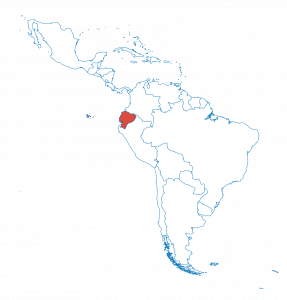
The Agreement:
The ACA was effected by diplomatic exchange on July 16 and 23, 2025 and posted to the Federal Register on November 17, 2025.
The United States may propose the transfer of third country nationals, and Ecuador has “complete discretion” in accepting such proposals. The ACA is unclear whether the proposal must be on an individual or group basis, but Ecuador can consider accepting a proposal “in whole or in part.”
Exceptions: Unaccompanied minors cannot be transferred to Ecuador.
Access to Protection: Ecuador agrees not to transfer anyone to their country of origin until a final decision has been made with any pending protection claims. Ecuador will determine a procedure for individuals who fail to seek protection.
Known Transfers:
Monthly transfers have been occurring since January 2026, including on June 1, 2026. 121 individuals were reported to be deported as of June 2026.
Country Conditions: Ecuador – United States Department of State
Party to the 1951 Refugee Convention and 1967 Protocol: Yes
Ratified Convention against Torture: Yes
El Salvador
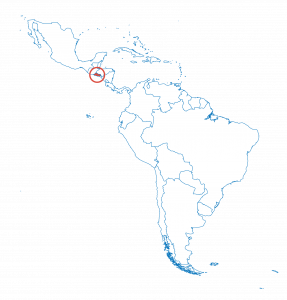
The Agreement:
The Salvadorean president, Nayib Bukele announced on February 3, 2025, that El Salvador would detain U.S. deportees in exchange for a fee. Diplomatic notes on the secret agreement, conducted around March 13-14, 2025, were made public months later through a FOIA request by Refugees International and Human Rights First. According to the notes, asylum seekers and migrants were to be detained for a year pending “further decisions.” El Salvador received $4.76 million in exchange for the deportees.
Known Transfers:
A total of approximately 252 Venezuelans were sent to El Salvador: 238 Venezuelans and 23 Salvadorans were sent to Centro de Confinamiento del Terrorismo (CECOT) in March 2025, and 14 Venezuelans and 13 Salvadorans in late March and early April. These numbers are approximations as El Salvador refused to disclose exact number.
Many Venezuelans were in the process of immigration court proceedings, so President Trump invoked the centuries-old Alien Enemies Act in order to deport them, denying them the right to have their asylum case decided.
On July 18, 2025, more than 250 Venezuelans were refouled to Venezuela in a prisoner exchange where Venezuela freed 10 Americans.
More information: United States Frees Venezuelans Held in El Salvador Following Prisoner Swap – American Immigration Council
Country Conditions:
Party to the 1951 Refugee Convention and 1967 Protocol: Yes
Ratified Convention against Torture: Yes
Guatemala
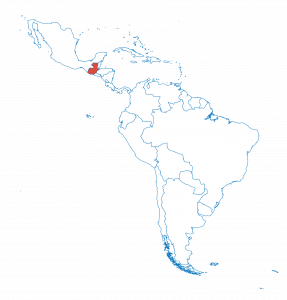
The Agreement:
The agreement was effected by diplomatic exchange on June 11 and 13, 2025 and posted to the Federal Register on July 15, 2025. It concerns nationals of Central American countries. The President stated that it was not a “safe third country agreement,” but rather an “exchange of notes” designed to facilitate the “dignified and safe return” of Guatemalans and Central Americans through Guatemala, raising concerns of non-refoulement.
Known Transfers:
Third-country deportations to Guatemala outside the parameters of the ACA began on October 10, 2025, and are ongoing. As of June 2026, about 80 Hondurans, 60 Salvadorans, 20 Nicaraguans, and 850 Mexicans had been deported.
As of August 2026, 2,284 Mexicans had been deported to Guatemala since the beginning of the year. According to the Guatemalan president, these deportations were part of a “stopover” before being repatriated to Mexico within 24 hours as part of an “arrangement” with the Mexican government, and these individuals did not have any refugee or asylum status. According to Mexico’s National Migration Institute (INM), Mexicans who are deported to Guatemala and Honduras are then bussed to southern Mexico.
Country Conditions: Guatemala – United States Department of State
Party to the 1951 Refugee Convention and 1967 Protocol: Yes
Ratified Convention against Torture: Yes
Honduras
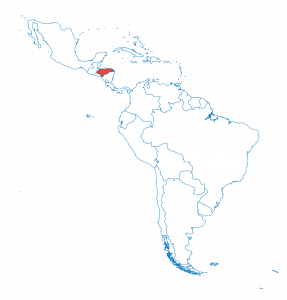
The Agreement:
The ACA was signed on March 10, 2025, amended on June 25, 2025, and posted to the Federal Register on July 8, 2025. The amendment was made to give retroactive effect, so that the United States could transfer individuals who have arrived in the United States before the ACA entered into force to Honduras.
Honduras has discretion on the acceptance of individuals. A UN delegation stated that 10 individuals are deported to Honduras every month.
Exceptions:
- The ACA does not apply to citizens or nationals of, or if stateless, habitual residents of Honduras.
- The United States must follow domestic laws and international obligations with respect to unaccompanied minors. It is the United States’ responsibility to determine if the individual is an unaccompanied minor.
- Honduras does not agree to accept individuals involved in crimes against humanity, drug trafficking, terrorism, human trafficking, smuggling of migrants, child pornography, human rights violations, other activity linked to illicit activities, or subject to Interpol notifications.
Access to Protection:
The ACA states that it will follow its national laws and regulations to examine any individual protection requests. A UN delegation stated that individuals who were transferred to Honduras were assisted in applying for asylum and in getting access to work in Honduras.
Known Transfers:
Between October 2025 through April 2026, about 80 asylum seekers have been deported under the ACA.
From October 2025 to March 2026, more than 90 Guatemalans were deported outside of the parameters of the ACA.
In June 2026 Honduras began receiving Mexicans outside of the ACA with 165 people deported by mid-July according to Third Country Deportation Watch and 37 Mexicans who stopped in Honduras in mid-August 2026 on their way back to Mexico. According to Mexico’s National Migration Institute (INM), Mexicans who are deported to Guatemala and Honduras are then bussed to southern Mexico.
Country Conditions:
Honduras – United States State Department
Party to the 1951 Refugee Convention and 1967 Protocol: Yes
Ratified Convention against Torture: Yes
Mexico
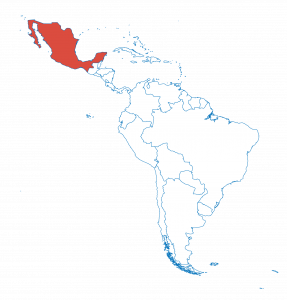
The Agreement:
A form of this third-country agreement began under the first Trump administration in the form of forced transfers over the U.S.-Mexico border. However, the current third-country deportation agreement is not publicly available.
Several externalization measures involving Mexico have previously existed. One process used under the first Trump administration known as metering, is when:
Country A (the U.S.) limits the number of asylum seekers processed at ports of entry, forcing asylum seekers to turn back to contiguous Country B (Mexico) to wait for an opportunity to seek admission into Country A. Asylum seekers may have been turned back before or after arriving in Country A.
Other externalization arrangements include the Remain in Mexico Program that was terminated under the Biden Administration. More information can be found in the Country Conditions section.
Known Transfers:
According to Third Country Deportation Watch, there were about 20,000 third-country nationals, primarily of Cuban, Venezuelan, Guatemalan, Honduran, Salvadoran, Nicaraguan, and Haitian nationality deported to Mexico between January 20, 2025, and August 15, 2026. Guatemalans and Salvadorans have been refouled to their origin countries despite U.S. protection from removal there. These transfers occur on a nearly daily basis, and Mexico has received the vast majority of U.S. third-country nationals (approximately 87% according to our data).
Country Conditions:
The United States has engaged in border diplomacy with Mexico in various ways over the last century. The overall impact has been to externalize migration control by making Mexico a filter for migrants heading north from South and Central American countries. To do this, the U.S. government aims at not only working with Mexico to control the U.S.-Mexico border but also helping Mexico control its own borders.
These efforts include joint intelligence sharing, such as the Se Busca Campaigns and operational guidance. This externalization is also evident in practices such as metering, where asylum seekers are turned back to wait for the opportunity to seek asylum in the United States, and offshoring, where the asylum seeker must wait in Mexico while their U.S. asylum claim is being processed. The Biden administration also made agreements with Mexico to continue accepting Venezuelan, Nicaraguan, Cuban and Haitian migrants. In this way, Mexico acts as a partner in controlling entry to the United States.
Mexico – United States Department of State
Party to the 1951 Refugee Convention and 1967 Protocol: Yes
Ratified Convention against Torture: Yes
Nicaragua
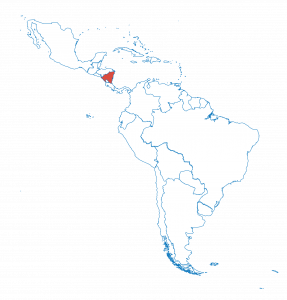
The Agreement:
There is no publicly available agreement between the United States and Nicaragua as of June 2026. According to Carolina Sediles, legal adviser to the Nicaraguan American Human Rights Alliance (NAHRA), it is likely the deportees themselves or their families who request admission to Nicaragua on a case-by-case basis.
Known transfers:
116 foreign nationals were deported to Nicaragua between January 2025 and June 2026. These include individuals from Honduras (22), Cuba (19), Ecuador (17), Guatemala (11), Colombia (11), Peru (7), Venezuela (6), El Salvador (6), Nigeria (5), and one or two nationals from Bangladesh, Costa Rica, the Dominican Republic, India, Iran, and Mexico.
According to the Deportation Data Project:
- 82 individuals were deported under “Code 8,” which applies to migrants who were either intercepted and turned back at the border or apprehended and removed from within the United States.
- 11 individuals were removed under “Code 6,” which applies to migrants arrested inside the United States for violating immigration laws.
- 22 individuals were processed under “Code 3,” a form of voluntary departure granted by an immigration judge, allowing them to leave the United States at their own expense.
Country conditions: Nicaragua – United States Department of State
Party to the 1951 Refugee Convention and 1967 Protocol: Yes
Ratified Convention against Torture: Yes
Panama
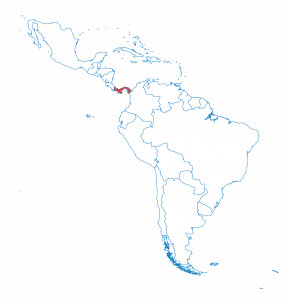
The Agreement:
The Memorandum of Understanding (MOU) signed by the United States and Panama in July 2024 was expanded on February 2, 2025. The original MOU provided U.S.-funding for deportation flights from Panama to primarily Ecuador and Colombia. The expanded agreement made Panama into a return hub financed by the United States amidst economic and diplomatic threats over control of the Panama Canal.
Known Transfers:
On February 12, 14, and 15, 2025, a total of 299 migrants and asylum seekers were deported to Panama through an unwritten agreement. These individuals were from: Afghanistan, Cameroon, China, Eritrea, Ethiopia, Ghana, India, Iran, Nepal, Pakistan, Russia, Somalia, Sri Lanka, and Uzbekistan. Many were seeking asylum in the United States when they were detained and expelled without protection screening after President Trump suspended asylum at the border on January 20, 2025.
Within a week of the first transfer, 170 detainees had been repatriated, risking chain refoulement.
The government of Panama had announced on May 13, 2026, the creation of a Special and Temporary Transit Regime for nationals of Spanish-speaking countries in Latin America, granting them a 30-day, non-extendable transit period in Panama after which they must leave for their country of origin or a third country. The program does not provide any immigration status, asylum, or pathway to regularization and Panama states that it is not being recognized as a safe third country. On May 22, 134 Venezuelans were repatriated from Panama on a U.S.-funded flight, and the National Migration Service of Panama has begun offering assisted returns for Venezuelans.
On May 14, 2026, a group of Honduran nationals were deported.
On June 5, 2026, a group of Colombian, Paraguayan, Ecuadorian, and Dominican nationals were deported.
On June 19, 2026, individuals not yet identified were deported.
Country Conditions: No Exit – The New York Times
Party to the 1951 Refugee Convention and 1967 Protocol: Yes
Ratified Convention against Torture: Yes
Paraguay
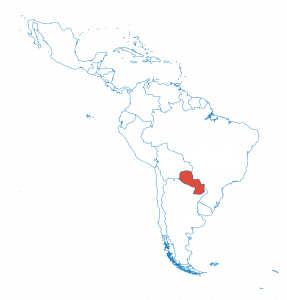
The Agreement:
The ACA was signed on August 14, 2025, and posted to the Federal Register on December 23, 2025. The Memorandum of Understanding (MOU) is between DHS and DOS as U.S. parties and the Paraguayan National Commission for Stateless Persons and Refugees (CONARE). The ACA states that the United States and CONARE “shall develop operating procedures,” which have not been publicly released.
The United States may propose the transfer of “third country nationals,” and CONARE shall consider accepting them. The ACA is unclear whether the proposal must be on an individual or group basis, but CONARE can consider accepting a proposal “in whole or in part.”
Exceptions: Unaccompanied minors cannot be transferred to Paraguay.
Access to Protection: CONARE agrees not to transfer anyone to their country of origin until a final decision has been made with any pending protection claims. CONARE will determine a procedure for individuals who fail to seek protection.
Known Transfers:
On April 22, 2026, 16 people from Spanish-speaking countries including Bolivia, Colombia, Ecuador, El Salvador, the Dominican Republic and Spain were deported. Reports stated that they would remain in Paraguay for 72 hours to be subsequently repatriated by the International Organization for Migration (IOM) with funding from the United States.
On May 21, 2026, 10 individuals from Chile, Dominican Republic, and Bolivia were deported.
On June 19, 2026, 12 individuals were deported.
Country Conditions: State Department – Paraguay Travel Advisory
Party to the 1951 Refugee Convention and 1967 Protocol: Yes
Ratified Convention against Torture: Yes
Countries in the Caribbean
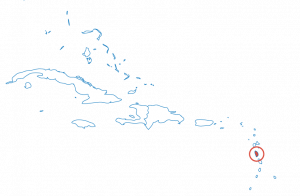 Dominica
The Agreement:
Dominica, along with Antigua and Barbuda, said in early January 2026 that they had agreed to start receiving U.S. asylum seekers. According to diplomatic notes obtained following a FOIA request from Refugees International and Human Rights First, the United States would provide Dominica with the criminal record and medical history of each proposed individual and Dominica promised to treat third country nationals in accordance with international law.
Dominica said it would not accept deportees without financial contributions from the United States for “food, housing, and other related matters.” According to the Prime Minister, the agreement “allows for no more than seven people per quarter, which amounts to a maximum of 28 individuals per year.” He also said they were working closely with the IOM to “manage the operational aspects, including logistics, accommodation and support services.”
Known Transfers:
On July 22, 2026, the first ICE Air flight transferring third country nationals took place according to Third Country Deportation Watch.
Country Conditions: Dominica – United States Department of State
Party to the 1951 Refugee Convention and 1967 Protocol: Yes
Ratified Convention against Torture: Yes
Saint Kitts & Nevis
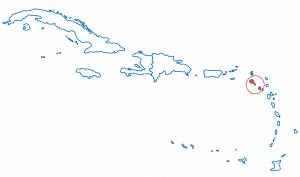
The Agreement: On January 8, 2025, Prime Minister Dr. Terrance M. Drew announcedthat Saint Kitts and Nevis had entered into a Memorandum of Understanding (MOU) with the United States, made public in March 2026by a FOIA request by Refugees International and Human Rights First. The ACA is not yet published in the Federal Register.
Prime Minister Drew stated that only certain nationals of CARICOM member states (except nationals of Haiti) would be eligible for transfer. Individuals with convictions for violent or sexual offenses are excluded from the agreement. Saint Kitts and Nevis retains sole discretion to accept or rejected any proposed individuals for transfer.
The Prime Minister also stated that the United States would pay for relocation, housing, and sustenance.
Known Transfers:
On May 19, 2026, the administration sent three third-country nationals to Saint Kitts and Nevis as part of the January MOU. This was the first transfer under the bilateral agreement. These asylum seekers consisted of three individuals from CARICOM member states, specifically Jamaica and Belize.
Country Conditions: Saint Kitts and Nevis – United States Department of State
Party to the 1951 Refugee Convention and 1967 Protocol: Party to the Convention but not yet acceded to its 1967 Protocol (along with Madagascar)
Ratified Convention against Torture: Yes
Countries in Europe
Kosovo
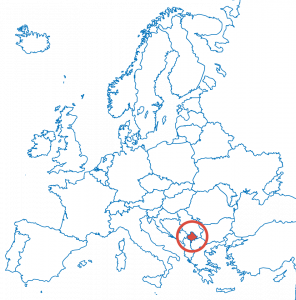
The Agreement:
Diplomatic notes show an agreement made on June 11, 2025, for the transfer of third-country nationals with final orders of removal. These notes were made available following a FOIA request by Refugees International and Human Rights First. Kosovo agreed to accept up to 50 non-criminal individuals over a one-year period with U.S. funding to be “temporarily relocated” while officials worked to facilitate “their safe return to their home country.”
Known Transfers:
One or two people were deported to Kosovo in December 2025.
Country Conditions:
Kosovo – United States State Department
Balkan Insight – Kosovo Counts Cost and Benefit of Prisoner Deal with Denmark
Since Kosovo has been denied full recognition as a UN member state, it cannot be a signatory to the 1951 Refugee Convention or the Convention against Torture. However, it remains obliged to respect the principle of non-refoulement and has adopted international human rights instruments such as the Convention against Torture in its Constitution.
Moldova
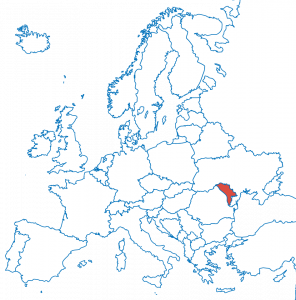
The Agreement:
The terms of this agreement are not publicly available.
Known Transfers:
On March 10, 2026, 16 individuals were deported, including around 10 Russians and nationals of Eastern European countries.
On April 30, 2026, an additional group of Russians were deported.
On June 10, 2026, unidentified individuals were deported.
Country Conditions: Moldova – United States Department of State
Party to the 1951 Refugee Convention and 1967 Protocol: Yes
Ratified Convention against Torture: Yes
Poland
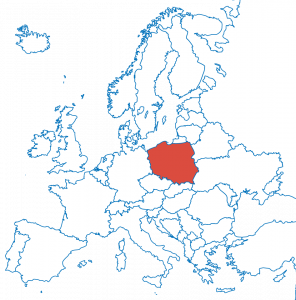
The Agreement:
The terms of this agreement are not publicly available.
Known Transfers:
On November 18, 2025, the State Border Guard Service of Ukraine received 50 Ukrainians who were deported to Poland and refouled to Ukraine. These individuals included 45 men and five women.
On March 17, 2026, two flights carrying Ukrainian nationals arrived in Poland.
On April 30, 2026, an additional flight deported Ukrainian nationals to Poland for probable refoulement to Ukraine.
Country Conditions: Poland: Blocking Access to Asylum, Violating Human Rights on the Border
Party to the 1951 Refugee Convention and 1967 Protocol: Yes
Ratified Convention against Torture: Yes
Countries in Oceania
Palau
The Agreement:
In December 2025, the U.S. and Palau signed an agreement that allowed the U.S. to send up to 75 third-country deportees (ten at a time) to the island of Palau in exchange for $7.5 million. Palau stated that all individuals must have no criminal record, have a valid passport, and not be undergoing any medical treatment.
Known Transfers:
In late May 2026, the first third-country national was deported. The Palau president’s office said they “brought him to his temporary residence and helped him connect his phone and settle in.”
On July 8, 2026, two additional Vietnamese nationals were deported.
Country Conditions: Palau – United States Department of State
The Guardian – Released Guantánamo Uighurs land in Palau
Party to the 1951 Refugee Convention and 1967 Protocol: No
Ratified Convention against Torture: Yes
Transfer Hubs
Egypt, Kuwait, and Qatar are not formally part of our tracker due to the fact that they act as transfer or what some have called “refoulement hubs.” These countries offer no known opportunity for migrants to seek asylum or otherwise remain in these countries. After migrants arrive at the transfer hub, they are forcibly removed to their countries of origin after mere hours. Egypt acts as a transfer hub to Russia and Iran, and Kuwait and Qatar to Iran.
For more information: Tracking All of Trump’s Known Third-Country Removals
Advocacy & Litigation
U.S. Litigation
Since individuals are typically in some form of immigration detention before being deported, immigration rights advocates and the press tracking ICE flights have sounded the alarm before potential flights. Individuals and public interest groups have launched federal court litigation to try to prevent unlawful deportations, enforce due process, and bring individuals back to the United States. Other litigation has sought to compel the federal government to release public information through Freedom of Information Act (FOIA) lawsuits.
DVD v. Department of Homeland Security
A class-action suit filed in March 2025 challenging the legality of third-country deportations. A federal judge found the practice unlawful in February 2026 and this case is ongoing.
D.V.D. v. U.S. Department of Homeland Security, 1:25-cv-10676 – CourtListener.com
Litigation in the third country
Once removed from U.S. soil and airspace, U.S. judges have limited power to stop the U.S. federal government and third countries from placing individuals into detention, subjecting them to mistreatment or torture, and deporting them to other countries, including a country where they may be persecuted or tortured. Human rights lawyers in third countries have launched litigation to try to release deportees from detention and prevent further human rights abuses.
Responses from Intergovernmental Organizations
- On May 13, 2025, the UN Human Rights High Commissioner voiced concern over U.S. third country deportations of Venezuelans and Salvadorans to El Salvador’s Centre for Terrorism Confinement (CECOT): “This situation raises serious concerns regarding a wide array of rights that are fundamental to both US and international law.”
- On July 8, 2025, UN Special Rapporteurs sounded alarm at the U.S. Supreme Court’s order clearing the way for the U.S. Government to resume third country deportations. They stressed that reasonable fear assessments “must be individual as well as country-specific.”
- On July 31, 2025, the African Commission on Human and Peoples’ Rights expressed concern for third country deportation agreements with South Sudan and Eswatini. The Commission called the deportations a “delegation of detention,” and raised concerns about violations to the African Charter on Human and Peoples’ Rights and the African Guiding Principles on the Human Rights of All Migrants, Refugees and Asylum Seekers.
- On August 31, 2025, the African Commission on Human and Peoples’ Rights urged Rwanda and Uganda to ensure transparency of agreements and to ensure human rights. The Commission stated concern that the agreements may violate the African Charter on Human and Peoples’ Rights and that migrants are being sent to a “disposal zone” for arbitrary expulsions.
- On October 6, 2025, the UN High Commissioner for Refugees stated in a speech that he is worried about the legality of current deportation practices in the United States. He pleaded to countries, “When you decide to explore such arrangements, consult with us. Engage us.”
- IOM Policy on Return, Readmission, and Reintegration
DHS Documents
- February 18, 2025 DHS Policy Directive on third country deportations
- March 30, 2025 DHS Memo, Guidance Regarding Third Country Removals
- July 10, 2025 ICE Memo, Third Country Removals Following the Supreme Court’s Order in Department of Homeland Security v. D.V.D., No. 24A1153 (U.S. June 23, 2025)
Congressional Oversight and Investigations
- February 2026 Senate Foreign Relations Committee Minority Report written by Senators Jeanne Shaheen, Chris Coons, Chris Murphy, Tim Kaine, Jeff Merkley, Cory Booker, Chris Van Hollen, Tammy Duckworth, and Jacky Rosen. The report finds third-country deportations to be costly, ineffective, without oversight, and circumventing U.S. immigration law.
- September 24, 2025 Congressional Letter (Sen. Warren) seeking information on third country deportations, with the signatures of 67 members of Congress
- November 10, 2025 Ranking Member Sen. Shaheen Letter to DOS Secretary Rubio asking for information about a $7.5 million transfer to Equatorial Guinea
Resources
Resources for Legal Practitioners
- Justice in Motion (JiM) has created a post-deportation intake and referral form for U.S.-based advocates to request that JiM engage in post-deportation monitoring and response to detect potential rights violations that occurred during the arrest, detention and/or deportation. Upon receipt, JiM reviews and may task a member of the JiM Defender Network in MX, GT, ES, HN or NI, as appropriate (considering JiM resources + risk), to attempt communication with impacted or referenced deported migrants for a legal screening, and potential support connecting to local resources to meet immediate needs. JiM hopes to be able to help deported individuals connect or maintain connections to advice and legal representation, even after their deportation.
- January 29, 2025 NILA Practice Advisory, Protecting Noncitizens Granted Withholding of Removal or CAT Protection Against Deportation to Third Countries Where They Fear Persecution/Torture
- June 27, 2025 NILA Practice Alert, Third Country Deportations and D.V.D. v. DHS
- National Immigration Project, Fifteen Steps for Addressing Orders of Removal Issued by an Immigration Judge
Related Work by USCRI
About this Tracker
USCRI’s Third-Country Deportation Tracker documents publicly reported cases of third-country deportations and related policy developments. The tracker, prepared by USCRI’s policy and advocacy team, compiles information from publicly available government documents, court filings, media reporting, statements from international organizations, and other publicly available sources. It is intended to serve as a resource for researchers, journalists, policymakers, advocates, and the public.
The tracker uses a broad definition of third-country deportations to include countries where the country does not recognize deportees as citizens, rendering them stateless, such as in the case of Bhutanese refugees deported to Bhutan. Cases and developments are updated as new information becomes publicly available.
More Trackers
As the use of third-country deportations (or removals) has increased, several independent efforts have emerged to document and track the practice. USCRI’s tracker uses a broad definition of third-country deportations, including removals to countries such as Bhutan and Laos, and also documents related litigation and responses from intergovernmental organizations and Congress.
USCRI’s tracker complements these other efforts to document third-country deportations. While each publicly available tracker has its own methodology and scope, together they can begin to provide a more comprehensive picture of evolving U.S. third-country deportation policies and practices. USCRI’s tracker draws on publicly available information and, where possible, attributes data to its original source. Know of another source? Let us know.
Additional trackers include:
- Banished by Bargain, Third Country Deportation Watch (Refugees International and Human Rights First)- Tracks known third-country deportation agreements, removals, and related documents, including FOIA-released diplomatic notes.
- Human Rights First’s ICE Flight Monitor- Tracks ICE deportation flights
- Tracking All of Trump’s Known Third-Country Removals (Gillian Brockell)- Tracks third-country removal flights
Additional data sources:
- Witness at the Border – Tracks ICE Air deportation flights using publicly available flight data. It focuses on flight operations rather than specifically on third country removals and is frequently cited by researchers.
- Transactional Records Access Clearinghouse – Publishes immigration enforcement data and analysis based on government records. While it does not maintain a dedicated third-country deportation tracker, its datasets provide valuable context.