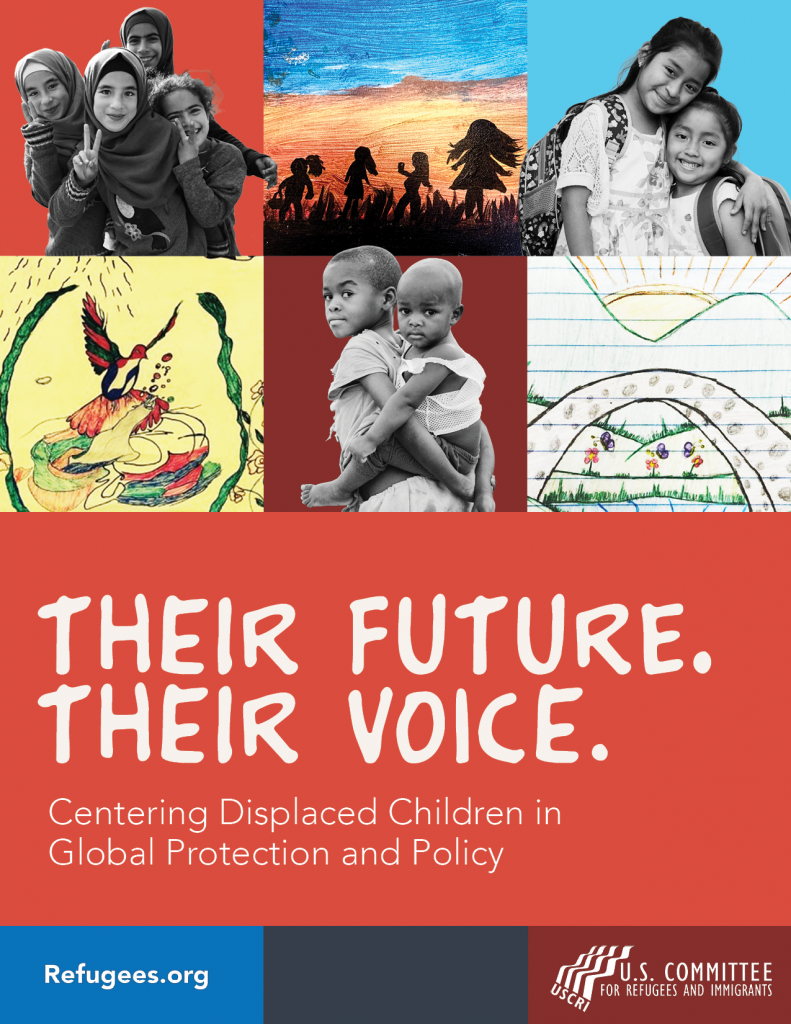
Their Future, Their Voice: Centering Displaced Children in Global Protection and Policy
We are witnessing an unprecedented global displacement crisis, with children bearing a disproportionate share of its consequences. Conflict, persecution, violence, climate disaster, and economic collapse have uprooted millions from their homes. The result has been fractured families, severed educations, and children exposed to violence, exploitation, discrimination, and relentless uncertainty. Yet despite being among those most profoundly affected by displacement, children remain too often excluded from the decisions, policies, and systems that will determine their futures.
Their Future, Their Voice arrives at a critical juncture. Global displacement remains at historic levels while pathways to durable protection are increasingly under strain. Humanitarian funding shortfalls and restrictive immigration policies are narrowing the space for action precisely when it needs to expand.
At the heart of this report is the argument that displaced children and youth must be recognized not only as recipients of protection, but as rights-holders and agents of change. Their experiences, perspectives, and aspirations should shape the policies and programs designed to support them.
Informed by refugee-led organizations, community-based groups, practitioners, and displaced young people themselves, the report spans a wide range of displacement contexts: from conflict in Sudan, the world’s largest child displacement crisis, to barriers to education in Mexico and Burundi, family separation in the United States, protection gaps for children from Syria’s al-Hol camp, and displacement in Uganda, Malawi, Kenya, Afghanistan, and Pakistan. Particular attention is given to girls, children with disabilities, and others consistently overlooked in humanitarian response.
Woven throughout are the voices of children and youth themselves. This includes their artwork, poetry, personal reflections, and first-hand accounts. From Habesha Scholars speaking about education and belonging, to refugee children in Sudan and Burundi, to former unaccompanied children in the United States, all carry a clear and consistent message: displaced children are not passive observers of their own futures. They hold knowledge, insight, and vision that must inform the decisions shaping their lives.
Across these diverse contexts, common themes emerge: the primacy of education access; the importance of family unity and child protection safeguards; the barriers that undermine children’s rights and limit access to essential services; the disproportionate vulnerabilities of girls and children with disabilities; and the essential role of local and refugee-led organizations working closest to affected communities.
This report is a call to governments, international organizations, civil society, and donors to strengthen protections for displaced children, invest in education and child-focused services, expand meaningful opportunities for youth participation, and resource the local actors doing this work every day. It is also a call to each of us to listen to the voices of displaced children and youth and to act with solidarity and sustained commitment.