
Ceuta, Spain – How Social...
In the weeks following the end of July 2026, the media has been flooded with pictures and videos of tens of thousands...
READ FULL STORY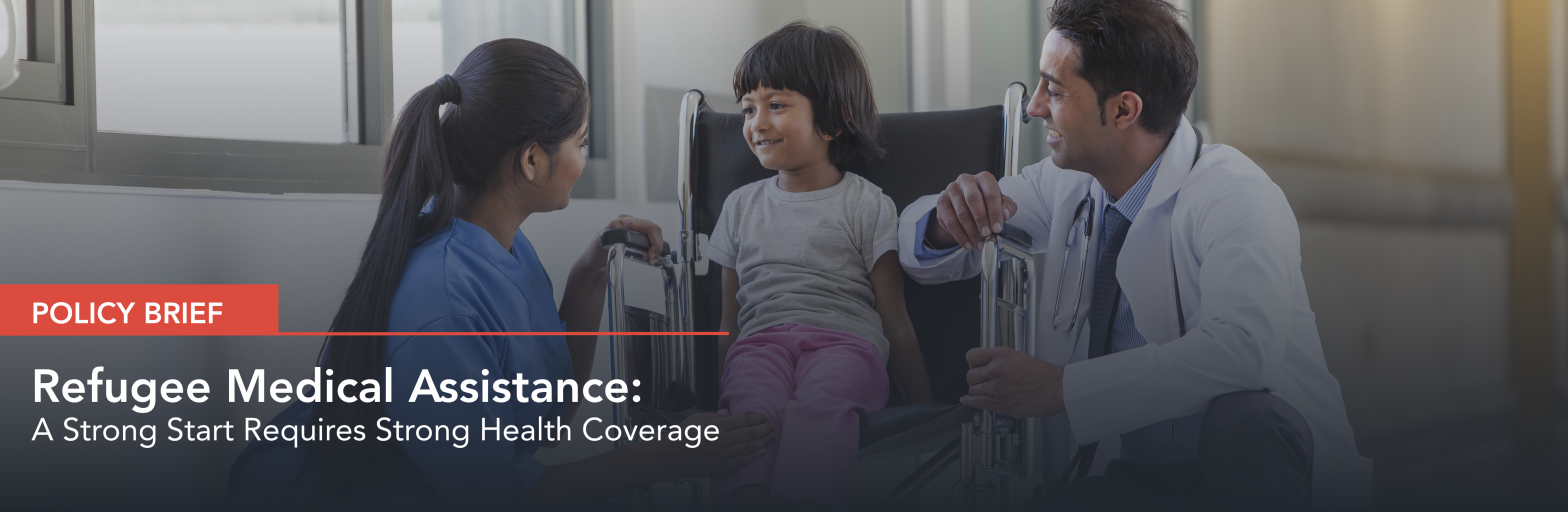
As refugees begin rebuilding their lives in the United States, access to reliable medical coverage is essential to give them the best chance at success. The 2025 reduction of Refugee Medical Assistance (RMA) from 12 months to four months undermines refugees’ ability to achieve medical stability, economic self-sufficiency, and successful integration, while increasing long-term public costs. In this policy brief, USCRI recommends restoring a longer coverage period, especially for high-need populations, and improving coordination with other insurance pathways to ensure continuity of care and better outcomes.
In 1980, the Refugee Act authorized the Office of Refugee Resettlement (ORR) to provide cash and medical assistance for up to 36 months after a refugee’s arrival in the United States. The latter medical component, known as Refugee Medical Assistance (RMA), is a federally funded health coverage program administered by ORR, which is part of the U.S. Department of Health and Human Services (HHS).
Over time Congress expanded eligibility to include asylees, Cuban/Haitian entrants, trafficking survivors, Special Immigrant Visa (SIV) holders including Afghans and Iraqis, and other ORR-eligible populations. As the amount of federal funding approved by lawmakers decreased through the annual appropriations process, the assistance went from 36 months to 8 months. RMA remained at this level for three decades until 2022 when ORR extended it back to 12 months, citing evidence that a longer eligibility period enabled refugees to address medical conditions that are barriers to self-sufficiency.
RMA provides similar health insurance coverage as Medicaid, which is a joint federal and state program that helps cover medical costs for people with limited income, as well as children and people with disabilities. Some ORR-eligible individuals may not qualify for Medicaid because their income exceeds applicable thresholds set by HHS as a percentage of the Federal Poverty Level. In other cases, immigration status may restrict individuals from qualifying for Medicaid.
Beyond access to healthcare, RMA enables refugees and other ORR-eligible individuals to receive medical screenings and management when they arrive in the United States. Screenings help identify conditions that may affect a refugee’s health and wellbeing, while also safeguarding the public health of communities in which they resettle. It is important to note that RMA is a time-limited benefit that covers the transitional period of resettlement. It serves as a bridge, giving individuals time before receiving health coverage from an employer or to qualify for longer-term public coverage.
Effective May 5, 2025, ORR reduced the eligibility period for RMA from 12 months to four months. The rationale for the decrease given by ORR in a Dear Colleague Letter, was to “avoid a significant budget shortfall,” given approximately 109,800 refugees and other eligible populations resettled in the U.S. during fiscal year 2024, and a 35% funding cut during the same period.
However, the numbers in fiscal year 2026 are significantly lower. As of April 30, 2026, there have been 6,069 arrivals under the U.S. Refugee Assistance Program, and the Presidential Determination for 2026 has a ceiling of 7,500. This admissions ceiling is the lowest level in the program’s 45-year history. Such a dramatic reduction in arrivals meaningfully changes the fiscal calculus ORR relied upon to justify the reduction.
Reducing the program to four months creates avoidable health, economic and integration barriers for newly arrived refugees, including those recently prioritized for admission. As ORR acknowledged in 2022, refugees need adequate time to find health coverage before RMA ends.
In its 2022 Federal Register notice, ORR acknowledged that expansion “would positively impact refugees who are not eligible for Temporary Assistance for Needy Families or Medicaid.” In addition to addressing important medical and/or mental health issues, an expansion of RMA allows refugees to focus on other key steps towards self-sufficiency, such as employment training, acquiring English, or securing a job.
Many refugee arrivals in 2026 are being placed in rural areas, which compounds the challenges in ensuring timely access to required medical coverage and screenings. Rural communities often have limited provider networks, long travel distances, and fewer appointment options, all of which complicate scheduling and delay essential services for newcomers.
Internal RMA coverage data from October 2024 through March 2026 reinforces these concerns. Of the more than 578,000 medical service visits, 84% were received at or later than four months after the date of eligibility. At the same time, around 20% of the RMA clients who received medical services – over 20,000 individuals – carry a diagnosis of a chronic condition. The most prevalent of these are: vitamin deficiencies, allergic airway diseases including asthma, hypertension, cholesterol disorders, Type 2 Diabetes, end-stage renal disease, hypothyroidism, and HIV.
Four months is insufficient for medical stabilization – Newcomers often arrive with untreated chronic conditions, acute medical needs, or gaps in preventive care. Four months rarely allows enough time to:
The reduction from 12 to four months leads to fragmented care, worsening conditions, and higher long-term costs.
Preventive care is far cheaper than crisis care – A longer RMA period shifts spending toward early intervention — vaccinations, screenings, chronic disease management — rather than emergency room visits, hospitalizations, or avoidable complications. This is the definition of fiscal prudence: small investments early prevent large expenditures later.
Structural barriers to rapid insurance enrollment – Even highly motivated individuals struggle to secure stable employment and employer sponsored insurance within four months. Barriers include:
Coverage ending before insurance begins creates a dangerous gap.
States and providers bear the cost of insufficient coverage – When RMA ends prematurely, the financial burden shifts to:
Extending RMA reduces strain on these already stretched systems.
A longer coverage period aligns with the realities of resettlement – Resettlement agencies, health departments, and clinics consistently report that newcomers need more time to achieve medical stability. Twelve months or longer aligns with the realistic timeline for:
This is the most effective, cost-efficient, and evidence-aligned approach.
These groups face the highest risk of medical deterioration when coverage ends early.
Ensuring smoother transitions reduces gaps in care and prevents avoidable costs.
Better data will help quantify the cost savings and health benefits of extended coverage.
Restoring a meaningful RMA eligible period, at the level HHS and Congress determines is fiscally sustainable, delivers proven health and economic benefits for ORR-eligible populations and the communities they call home. The conditions that were cited to justify the four-month reduction have changed dramatically, and the fiscal calculus has shifted. A restored RMA period will shift the spending towards preventive care, rather than crisis care.
Even if RMA coverage is extended, a larger threat looms for many ORR-eligible populations: the end of their Medicaid eligibility. H.R. 1, a major federal budget reconciliation act often called the “Big Beautiful Bill,” was signed into law on July 4, 2025. The bill narrowed the definition of “eligible alien,” restricting eligibility for Medicaid to lawful permanent residents and certain other groups. The law effectively ends eligibility for many other groups of lawfully present immigrants including asylees, refugees and survivors of domestic violence and trafficking. For newly arrived refugees navigating a compressed RMA benefit window, the change means that the longer-term safety net will no longer exist. The bill is set to take effect on October 1, 2026.
This brief was developed in collaboration with health professionals at USCRI who work directly with newly arrived refugees and have firsthand insight into the medical realities of resettlement. For more information or to discuss these recommendations, please reach out to [email protected]


In the weeks following the end of July 2026, the media has been flooded with pictures and videos of tens of thousands...
READ FULL STORY
Edited by William Evans, Policy Analyst In February 2026, when the U.S.-Iran War first broke out, military and geopolitical dimensions...
READ FULL STORY
Today, USCRI is proud to launch Their Future, Their Voice: Centering Displaced Children in Global Protection and Policy, a new...
READ FULL STORY